All The Things You Can Learn About Your Spine From An MRI
Category: Spine | Author: Stefano Sinicropi | Date: May 18, 2026
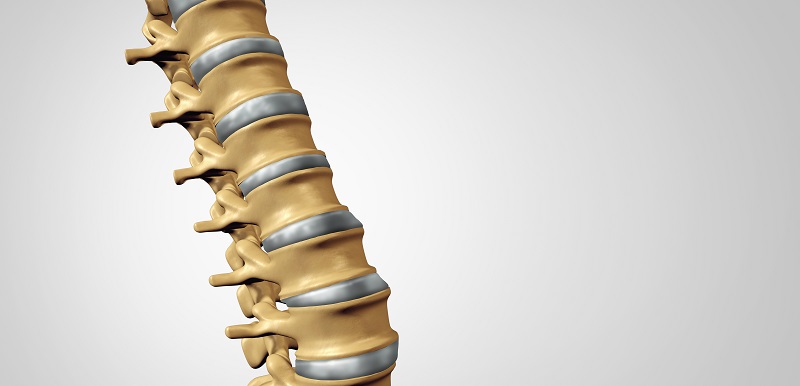
Although an x-ray is the most commonly ordered imaging exam, it’s far from the most telling. When other structures need to be analyzed or your physician wants a more detailed look inside your body, they’ll typically order Magnetic Resonance Imaging, or an MRI. The device uses powerful magnetic fields to create a detailed cross-sectional image on a computer of a section of your body. They are regularly ordered when more information about a spinal condition is warranted. In fact, an MRI can highlight and diagnose a wide variety of spinal issues. In today’s blog, we take a closer look at the wide variety of conditions that may be diagnosed with the help of an MRI.
What An MRI Can Diagnose In Your Back
Although an MRI may not be the most common way to diagnose all of these conditions, many of them would be evident on an MRI.
- Bulging Discs – The MRI can showcase malformations in specific disc areas.
- Herniated Discs – An MRI can also detail when a disc has fully herniated.
- Degenerative Discs – The size and shape of a disc can be determined, allowing the doctor to diagnose certain discs as degenerative.
- Nerve Compression – An MRI can reveal if a specific nerve is compressed as a result of shifted discs or other encroaching structures.
- Spinal Stenosis – The narrowing of neural pathways can also be seen on a detailed imaging exam.
- Ligament/Tendon Tears – Your doctor can pinpoint minor or major tears to key spinal soft tissues.
- Muscle Tears – Muscle strains and tears will be evident on an MRI.
- Spinal Cord Abnormalities – A physician can get a detailed look at the spinal cord with an MRI, allowing them to visualize cysts, tumors or other spinal cord abnormalities.
- Curvature Disorders – Your doctor can get a clear look at the alignment of your spinal vertebrae, allowing them to diagnose conditions like kyphosis, lordosis or scoliosis.
- Tumors – Tumors in and around the spine can be seen on an MRI.
- Infection – Signs of an infection, like fluid buildup and inflammation in a specific area of the spine, can be seen on an MRI.
An MRI will provide a detailed look inside the spine, but a good spine specialist will also consult with the patient to ensure their symptoms and coincide with what appears on the imaging test. A physical exam and a conversation with a patient can be just as important when diagnosing a patient and coming up with the right treatment plan.
To learn more about MRI exams or other ways your provider will work to diagnose and treat your spinal condition, connect with Dr. Sinicropi and the team at Midwest Spine & Brain Institute today at (651) 430-3800.
