How Does The Spine Heal After Herniated Disc Surgery?
Category: Spine | Author: Stefano Sinicropi | Date: May 17, 2026
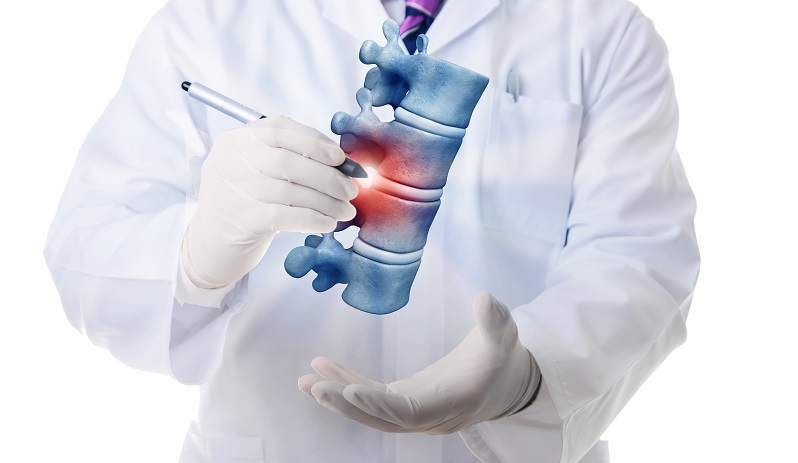
If you’ve been unable to get control over your herniated spinal disc with conservative methods, your spine specialist may recommend a corrective surgical procedure to address the disc. Most commonly, a discectomy is performed to remove a portion of the offending disc that is compressing nearby nerves. But what happens to the spinal disc once a portion of it has been removed? In today’s blog, we take a closer look at the disc healing process after a spinal discectomy procedure.
Discectomy Healing
One of the most common questions we hear from patients undergoing a discectomy is “Will the disc grow back?” After all, nobody wants a problem to return later in life. Fortunately, it’s unlikely that any formation will reappear and irritate the same nerve group. Here’s how a disc heals following a partial disc removal.
Once the portion of the damaged disc is removed, a small cavity is created in the disc. Your body recognizes this removal as physical trauma and initiates a trauma response. Blood fills the cavity right after surgery, and soon after the blood forms a clot as healing progresses. Eventually, this blood clot transitions into what’s known as a provisional matrix, otherwise described as a “simple fibrin-containing scaffold for wound healing.” It’s an early form of scar tissue that plays a critical role in wound remodeling. As time passes, that scar tissue remodels into fibrocartilage, which is its own type of connective tissue.
This fibrocartilage takes the place of the disc that has been surgically removed, and while it’s not quite as strong as the original disc material, it does provide a fair amount of support to the disc such that function increases and pain is minimized or non-existent. Because it’s not as strong or flexible as a standard spinal disc, it’s incredibly important that you follow your doctor’s post-op care instructions and rehabilitation program. You’ll undergo weeks of physical therapy and similar strength training exercises to strengthen the disc, its supportive structures and the spinal column as a whole. If your spine is stronger and better able to handle stress, it will take some direct pressure off your surgically addressed disc. Not only can physical therapy make your spine stronger, but it also reestablishes flexibility and motion in the spine, getting you as close as possible to normal spinal function.
Dr. Stefano Sinicropi – Expert Minnesota Spine Surgeon
So while your surgically repaired spinal disc will look a little different than other discs, if you trust your care to a spine surgeon like Dr. Sinicropi and you stick to your rehabilitation plan, we’re confident that you won’t notice much of a difference. In fact, we expect that when all is said and done, your disc and your spine as a whole will feel much better than it did prior to surgery! For more information about the discectomy surgery or whether it may be the right procedure for you, reach out to Dr. Sinicropi and the team at Midwest Spine & Brain Institute today at (651) 430-3800.
